Hailsham guardians
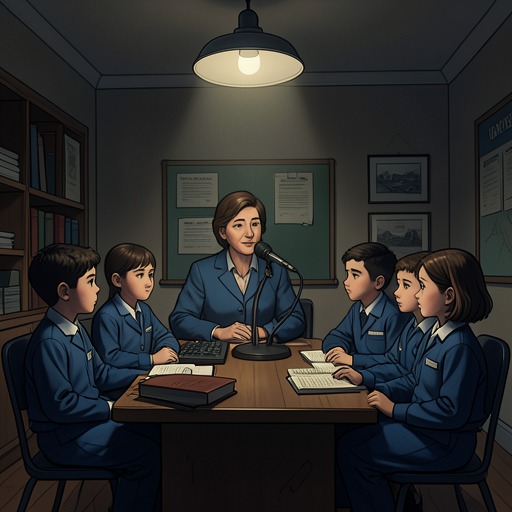
Never Let Me GoThe Hailsham guardians are the teachers and caretakers who shape the students’ education and childhood at Hailsham. Their influence rests on a tension: they try to prepare the children for lives already determined by the donation system, yet carefully manage what the children can understand and when. In Kathy H.’s adult recollections, their lessons, silences, and protective intentions remain intertwined; Miss Lucy’s insistence on telling the truth and Miss Emily’s later defense of concealment expose the cost and purpose of that approach.
Role and Daily Influence
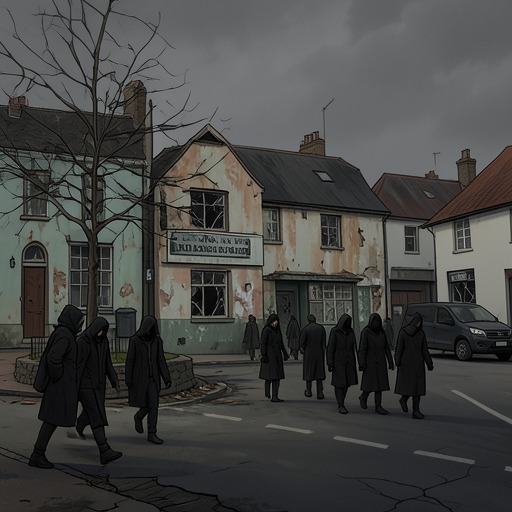
The guardians guide students through lessons, discussions, videos, and warnings, and encourage them to keep healthy. Yet the children’s understanding develops unevenly. At eight, Kathy and her peers recognize that they differ from their guardians and from people outside Hailsham, but have not grasped what that difference means. The friendly behavior of gardeners and delivery men offers little preparation for recognizing their isolation. Madame’s visible recoil gives Kathy a colder, more immediate lesson: the students can be regarded with fear even by someone who does not wish them harm.
The guardians’ authority also appears in what students find difficult to ask. When Miss Lucy stresses that students must stay healthy, no one asks why their health matters more than other people’s. At nine or ten, the students have some vague awareness of future donations, but conversations around the subject make the guardians awkward and leave the children embarrassed. Their silence is therefore not evidence that the subject has never reached them; it reflects a childhood in which partial knowledge and adult discomfort make further questions hard to pursue.
Education, Art, and Leaving Hailsham
The guardians encourage students to choose subjects for long essays that could occupy them for up to two years. Kathy recalls selecting Victorian novels without much thought and noticing Miss Emily’s searching look. At first, the essays seem to carry little weight among the students. Once they reach the Cottages, however, the work becomes a kind of farewell gift from Hailsham and helps some of them steady themselves in unfamiliar surroundings. The guardians’ educational influence thus continues after their direct authority ends: a school assignment becomes an object of attachment and a way of remembering home.
Art has a related importance. Tommy recalls that Miss Lucy said students’ work mattered for more than its evidentiary value, and that she connected Madame’s gallery with matters he did not yet understand about Hailsham and the students’ place in the wider world. Separately, Tommy remembers Madame explaining that pictures and poetry revealed what a student was like inside, even the student’s soul. These recollections place creative work at the intersection of education and the guardians’ larger project: the students are encouraged to make art, while its significance reaches beyond ordinary classroom achievement.
The guardians also prepare the students for life after Hailsham by making clear that there will be no guardians at the Cottages and that the young people will have to look after one another. Kathy remembers that she and her friends missed the guardians, and that Keffers, who maintained the Cottages, would not take on the role they had left behind. She nevertheless judges that Hailsham had prepared its students reasonably well to support one another. Their education therefore includes a practical lesson in mutual care, even as the protected school environment gives way to a less supervised life.
Disclosure and Disagreement
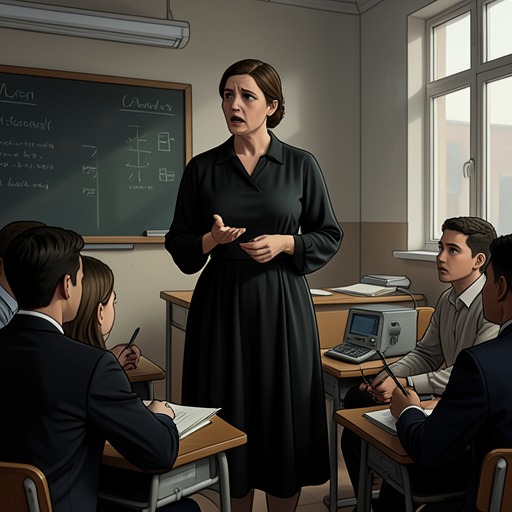
Miss Lucy challenges the guardians’ handling of the students’ future. At the pavilion, she tells the students plainly that they will not pursue ordinary careers such as becoming film stars or working in supermarkets; as adults, they will begin donating vital organs. She objects to a condition in which the students have received information without properly understanding it, and insists that they need to know who they are and what lies ahead. The disclosure is direct, but its immediate reception is muted. Word spreads quickly, yet conversation focuses more on Miss Lucy’s behavior than on the future she has described. Some students dismiss the information as something they already knew.
Kathy later considers how the guardians’ teaching may have produced this incomplete knowledge. Tommy proposes that they deliberately timed disclosures so the students would always be too young to understand the newest information, while still absorbing it at some level. Kathy finds this too much like a conspiracy theory to accept fully, but recognizes that donations had been present in her mind from an early age and that later talks rarely came as a complete surprise. She also observes that, when students were around thirteen, discussions of sex often ran alongside discussions of donations, allowing basic facts about their futures to enter lessons whose immediate subject held the students’ attention. The novel leaves the degree of deliberate planning uncertain while showing how repeated, partial information shaped what the students could know.
Miss Lucy and Miss Emily’s Competing Views
Years later, Miss Emily explains that Miss Lucy believed the students should be made more fully aware of who they were, what they were for, and what awaited them. The guardians considered that approach mistaken. In Miss Emily’s account, Miss Lucy had good intentions and the makings of an excellent guardian, but lacked practical judgment about what such knowledge would do to the students’ lives at Hailsham. Miss Emily says that protecting them made it possible for them to become absorbed in lessons, art, and writing rather than seeing every activity as pointless in light of their future.
Miss Emily does not deny that this protection involved concealment. She acknowledges that the guardians kept things from the students and lied to them, but argues that sheltering them gave them their childhoods. In her telling, the disagreement was not simply between truth and ignorance: it was also about whether full knowledge would destroy the conditions in which the students could learn and develop. Her conclusion that Miss Lucy had to leave Hailsham makes the disagreement consequential, revealing that the guardians’ shared profession did not mean they agreed on what care required.
Legacy and Narrative Significance
The Hailsham guardians are remembered through both their care and its limits. They give students lessons, creative work, and an environment in which childhood can unfold; they also regulate the timing and clarity of knowledge about the students’ futures. Kathy’s reflections preserve the distinction between hearing facts and understanding their meaning, while Miss Emily’s defense shows that the guardians understood their concealment as a form of protection. Miss Lucy’s challenge, by contrast, insists that care without full knowledge may leave the students unprepared to comprehend their own lives.
That tension persists after Hailsham closes its doors to the children who have grown up there. Kathy recalls the guardians not as a simple source of either kindness or deception, but as adults whose sheltering choices shaped what the students could value, remember, and later question. The guardians’ legacy is consequently both a childhood made possible and a truth delayed: the very protection that helped the students take their education seriously also left them to piece together the meaning of that education as adults.